
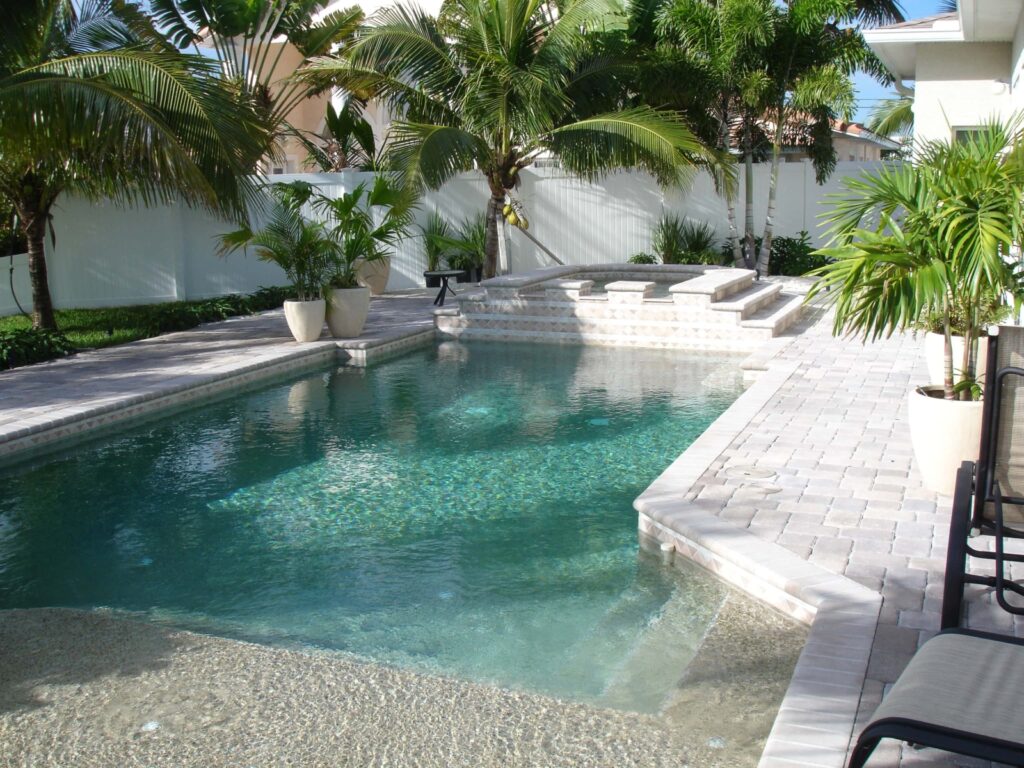
Cloudy water, itchy eyes, stained steps — most pool problems start with chemistry. Here's what balanced water means in Florida and what your service tech checks.
Last updated: November 2026
Short answer: To keep pool water balanced in Florida, test it regularly and hold five readings in range: pH, total alkalinity, calcium hardness, cyanuric acid (stabilizer) and free chlorine. Commonly recommended targets are pH 7.2–7.8, total alkalinity around 80–120 ppm, calcium hardness around 200–400 ppm, stabilizer around 30–50 ppm, and free chlorine around 1–3 ppm. Florida's heat, sun and heavy rain push these numbers around faster than in cooler climates, which is why weekly professional testing and balancing is so common here.
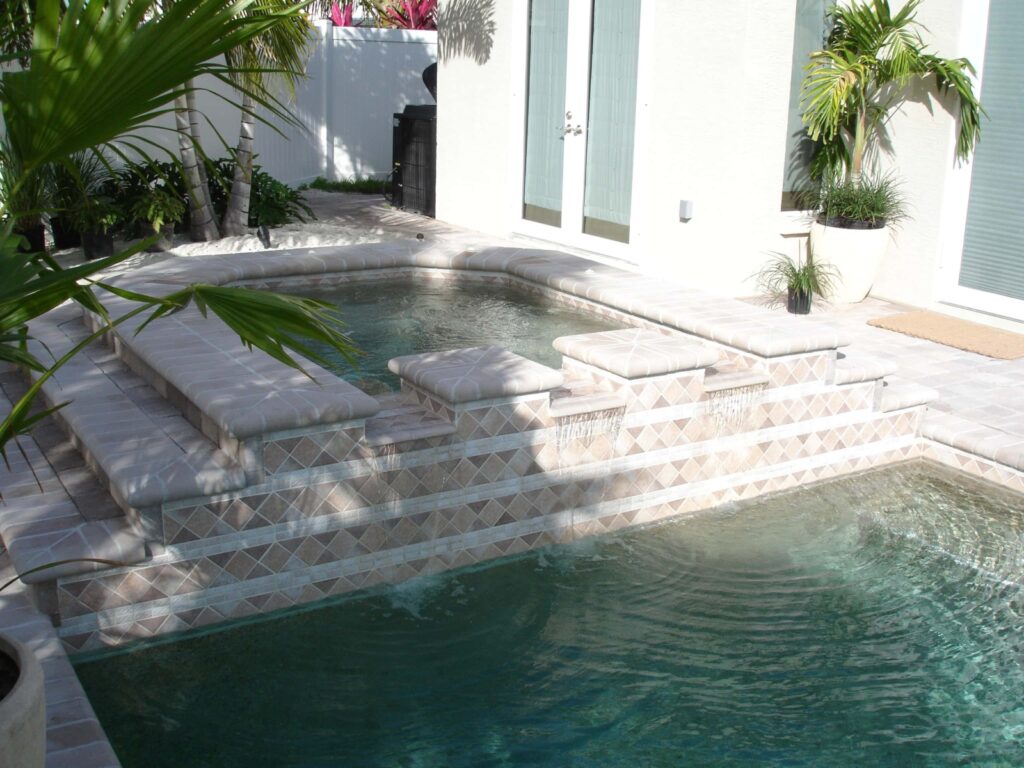
Curtis Pools has tested and balanced Pinellas County pool water since 1956. Here's what each number means and why it matters.
Why does pH matter in a pool?
pH controls how well chlorine works and how the water feels. Low pH is corrosive — it can etch plaster and damage equipment. High pH makes chlorine less effective and can cause cloudy water and scale. The CDC's Healthy Swimming resources explain why sanitizer and pH work together to keep swimmers healthy.
What does total alkalinity do?
Alkalinity acts as a buffer that keeps pH from swinging. If it's too low, pH bounces around; too high, and pH keeps creeping up.
Why does calcium hardness matter?
Water that's too soft pulls calcium from plaster and grout, roughening the surface. Water that's too hard leaves scale on tile and equipment. Getting it right protects your finish — see does your pool need resurfacing?
What is pool stabilizer and why does Florida need it?
Cyanuric acid (stabilizer) shields chlorine from the sun. In Florida's strong year-round sunlight, unstabilized chlorine burns off fast. Too much stabilizer, though, makes chlorine less effective — so it needs to stay in range.
How much chlorine should a pool have?
Enough free chlorine to sanitize steadily without irritating swimmers. Salt systems generate it automatically; traditional pools need regular additions. Compare them in saltwater or chlorine pool in Florida?
Why does Florida weather throw off pool chemistry?
- Heat speeds up chlorine use and algae growth.
- Sun breaks down chlorine.
- Rain dilutes chemicals and can shift pH and alkalinity.
- Heavy use adds sunscreen, sweat and debris.
Frequently Asked Questions
How often should pool water be tested?
At least weekly in Florida, and after heavy rain or heavy use. Our pool services include water analysis and balancing every visit.
Why is my pool cloudy even with chlorine?
High pH, high calcium, a dirty filter or poor circulation are common causes. A full water test usually points to the fix.
Do you offer pool chemical service in Dunedin?
Yes — we serve Dunedin, Safety Harbor, Largo and communities throughout Pinellas County. See how often should a pool be serviced?
Tired of chasing your water chemistry? Call Curtis Pools at (727) 559-7946 or ask about pool service — your Largo neighbors since 1956.