
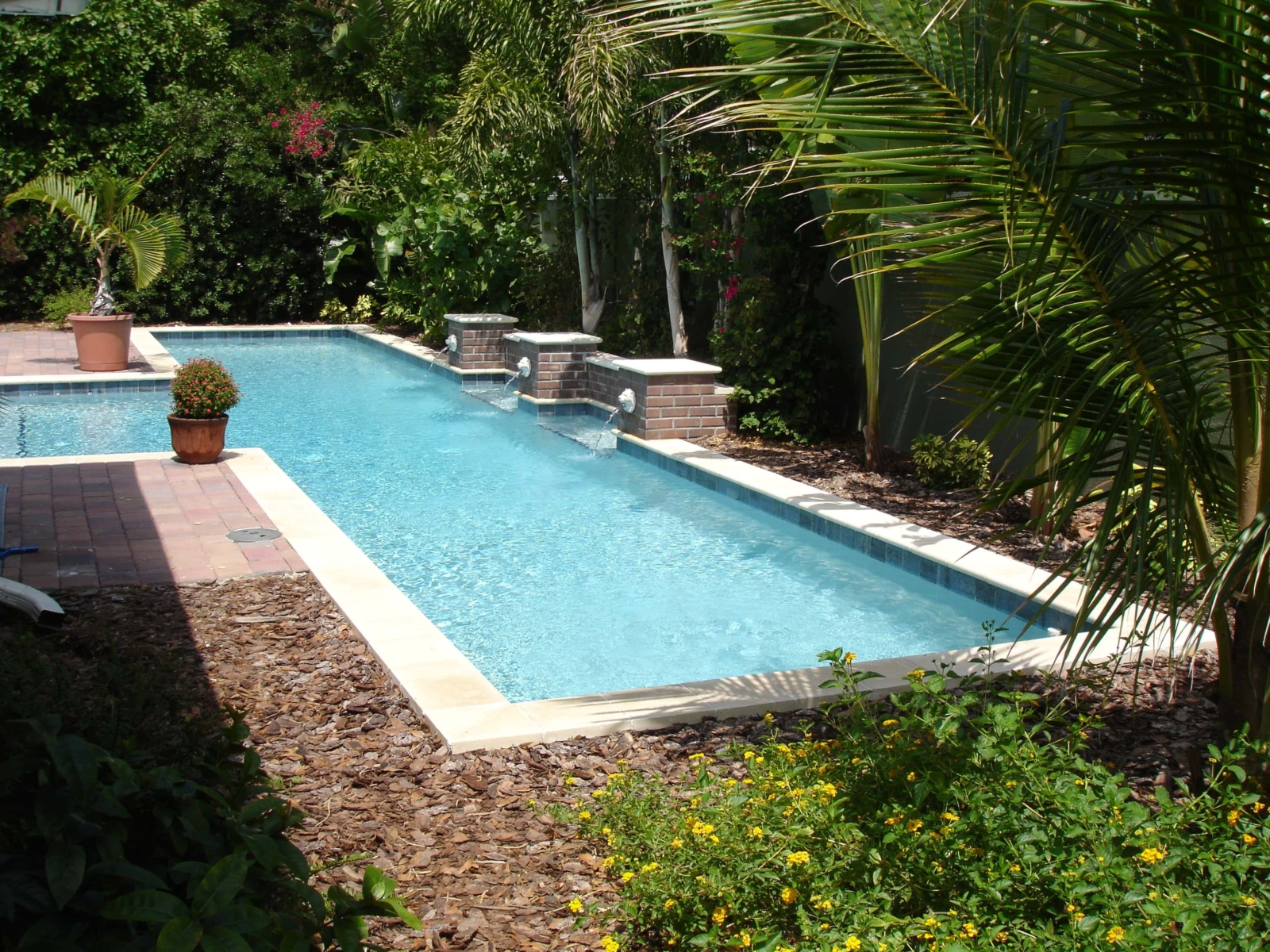
Saltwater pools feel softer — but they're not chlorine-free. Here's how salt and traditional chlorine really compare for a Pinellas County pool.
Last updated: October 2026
Short answer: A saltwater pool is still a chlorine pool — a salt chlorinator turns dissolved salt into chlorine on site. In the saltwater vs chlorine pool comparison for Florida, salt systems win on comfort and convenience: water feels softer, chlorine levels stay steadier, and you handle fewer chemical containers. Traditional chlorine wins on lower upfront cost and simpler equipment. Salt cells do wear out and need periodic replacement, and salt can be hard on some natural stone. For heavy year-round use in Pinellas County, many homeowners prefer salt.
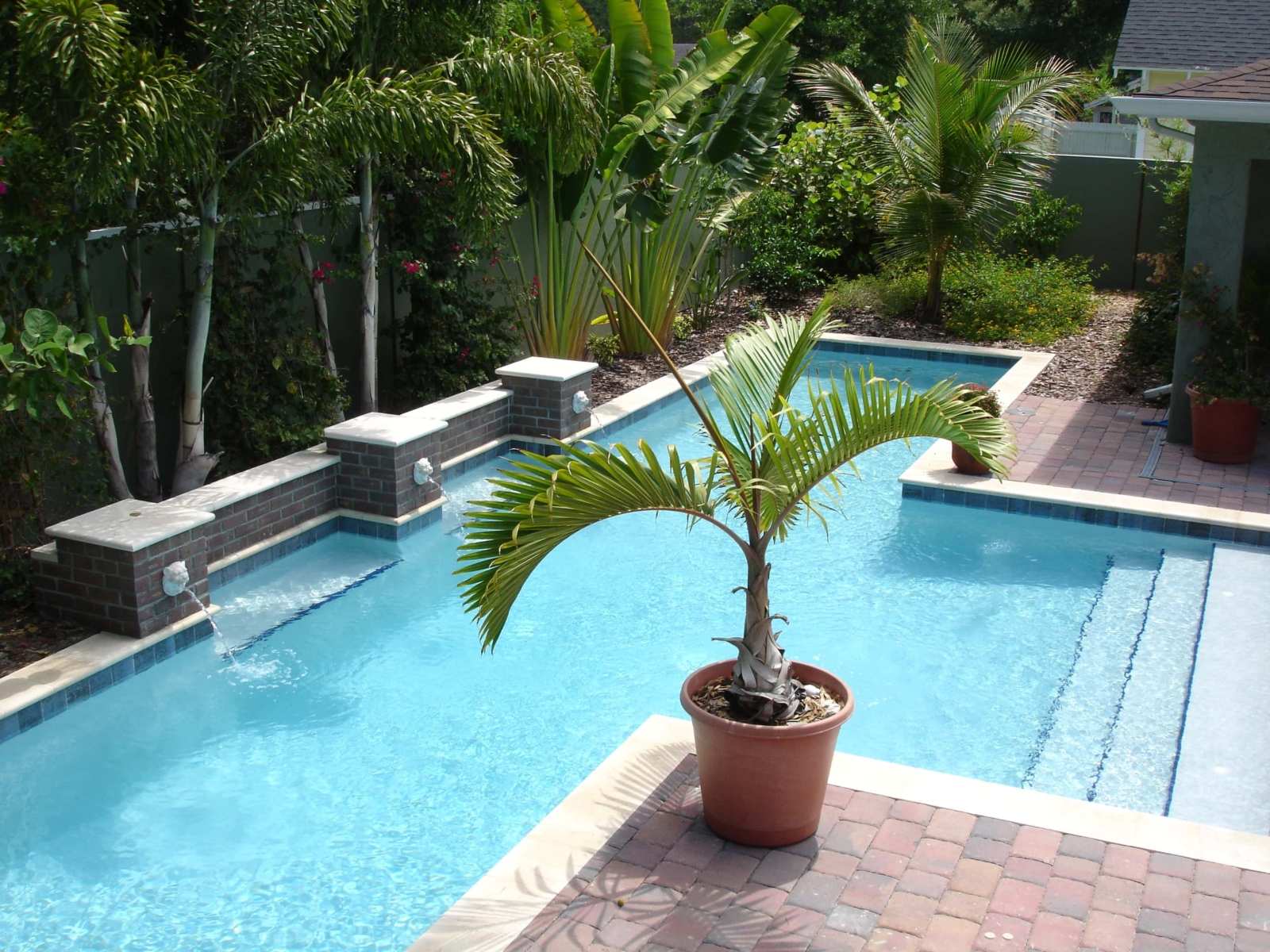
Curtis Pools installs salt chlorinator systems and converts existing pools from traditional chlorine. Here's the honest comparison.
How do saltwater and chlorine pools compare?
| Factor | Saltwater | Traditional chlorine |
|---|---|---|
| How chlorine is added | Generated from salt by a chlorinator cell | Added as tablets, liquid or granular |
| Water feel | Softer, gentler on eyes and skin | Can feel harsher when levels swing |
| Chlorine consistency | Steady, automatic | Peaks and dips between additions |
| Upfront cost | Higher — chlorinator and cell | Lower |
| Ongoing parts | Salt cell replaced periodically | Chemical purchases |
| Watch-outs | Salt can affect some natural stone and metal | Storing and handling chemicals |
Is a saltwater pool chlorine-free?
No. This is the most common misunderstanding. The salt cell produces chlorine continuously, so the water is sanitized the same way — just without the spikes. The salt level is low enough that it feels nothing like the Gulf.
Is saltwater easier to maintain in Florida?
Day to day, often yes. Florida pools run hard all year, and heat and sun burn off chlorine fast. A salt system keeps producing so you're not constantly topping off. You still need to test the water, balance pH (salt pools tend to drift upward), clean the cell and keep the filter in shape. Regular pool service covers all of that.
Can I convert my pool to saltwater?
Yes. Most existing pools can be converted by adding a salt chlorinator to the equipment pad. We check your equipment, finish and decking first. Salt systems are part of our pool upgrades lineup and can be planned into any new pool build.
Which should you choose?
- Choose saltwater if: you swim often, want softer-feeling water, and prefer fewer chemical runs.
- Choose traditional chlorine if: you want the lowest upfront cost and simplest equipment, or have natural stone you want to protect.
Frequently Asked Questions
Does salt damage pool surfaces?
Properly balanced salt pools work well with most finishes. Some soft natural stone and certain metals need extra care. We'll review your materials first.
How often does a salt cell need replacing?
It depends on use, water balance and the cell. Keeping it clean and the water balanced helps it last.
Does salt affect a pool heater?
Modern heaters are generally built for salt pools, but check your model. Thinking about heat too? Read do you need a pool heater in Pinellas?
Thinking about salt? Call Curtis Pools at (727) 559-7946 or get a free conversion estimate from Pinellas County's pool team since 1956.