
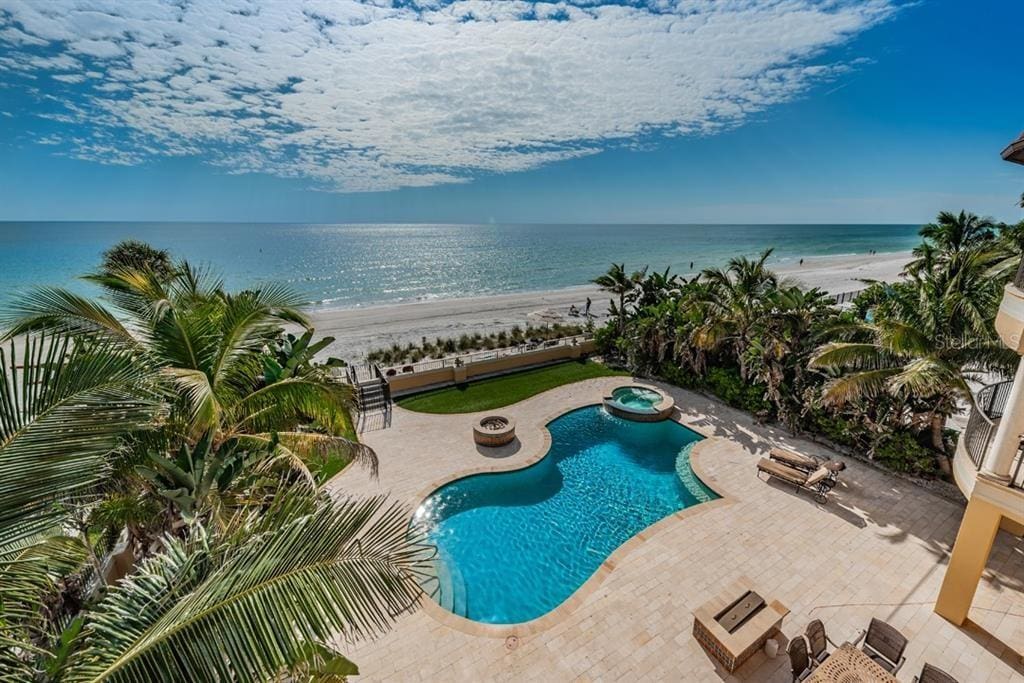
Barefoot on a hot August afternoon is the real test of a pool deck. Here's how pavers, travertine and concrete hold up around Pinellas County pools.
Last updated: November 2026
Short answer: The best pool deck material for Florida depends on what matters most to you. Travertine is a favorite because it stays cooler underfoot in strong sun and looks upscale. Concrete pavers are durable, slip-resistant, come in many colors and are easy to repair one piece at a time. Poured or finished concrete is the most economical and can be textured or coated for comfort. Whatever you choose, plan for heat, drainage and slip resistance — Florida decks see sun, rain and wet feet all year.
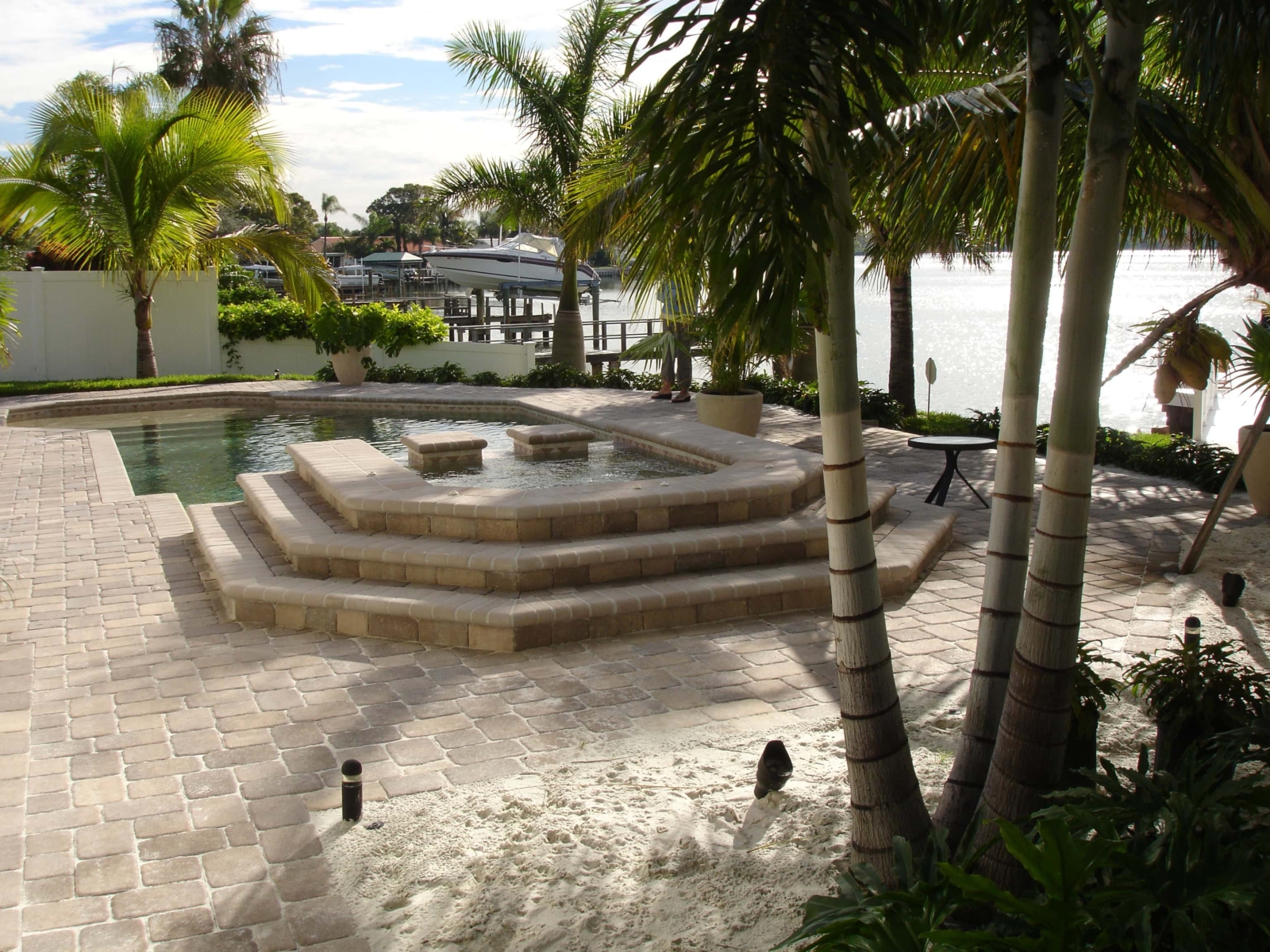
Curtis Pools installs pool decking as part of new builds, remodels and upgrades across Pinellas County. Here's how the common options compare.
How do pool deck materials compare?
| Material | Heat underfoot | Durability | Repair | Relative cost |
|---|---|---|---|---|
| Travertine | Cooler | Good; needs sealing | Replace individual pieces | Higher |
| Concrete pavers | Moderate; lighter colors stay cooler | Very good | Replace individual pieces | Middle |
| Concrete (finished or coated) | Varies with finish and color | Good; can crack | Patch or resurface | Lower |
Why is travertine popular around Florida pools?
Travertine is a natural stone with a porous surface that tends to stay cooler than many alternatives and drains well. It has a high-end look that suits Mediterranean and modern homes alike. Sealing helps protect it, especially around salt pools.
Are pavers a good choice?
Yes. Pavers are durable, slip-resistant and come in a wide range of colors and patterns. If one cracks or settles, it can be lifted and replaced without tearing out the whole deck. Lighter colors stay cooler in the sun.
Is a concrete pool deck still a good option?
Concrete is the most economical choice and can be textured, stamped or coated to improve comfort and grip. The trade-off is that cracks are harder to repair invisibly.
What else matters in a Florida pool deck?
- Drainage: summer downpours need somewhere to go.
- Slip resistance: wet feet and kids running.
- Color: lighter tones stay cooler.
- Salt compatibility: some stone needs sealing around salt pools.
- Enclosure: a screen enclosure cuts debris and bugs.
Frequently Asked Questions
Can I replace my deck without redoing the pool?
Often, yes — though if your pool also needs work, combining projects saves effort. See pool remodeling vs resurfacing.
Which deck works best with a saltwater pool?
Pavers and sealed travertine both do well. Read saltwater or chlorine pool in Florida?
Where can I see finished decks?
Browse our gallery and our pool decking and upgrades page. Also see which pool upgrades are worth it?
Ready for a new deck? Call Curtis Pools at (727) 559-7946 or get a free decking estimate from Largo's pool team since 1956.