Identify and Fix Water Imbalance Issues for Cleaner, More Stable Pool Conditions
Water problems rarely fix themselves—and they’re almost never solved by adding more chemicals blindly.
Cloudy water, algae growth, scaling, irritation, and inconsistent chlorine levels all point to underlying imbalance. The challenge is that most homeowners are only testing one or two variables, while the actual issue involves multiple factors interacting at once.
Swimming pool water analysis is the process of identifying those interactions and correcting them systematically so the pool stabilizes instead of constantly drifting out of balance.
Curtis Pools provides professional water testing and analysis for pools in Largo that aren’t holding clarity, require frequent adjustment, or never seem to stay consistent for more than a few days at a time.
If your pool feels like it’s always one step away from turning cloudy again, it may be time to schedule a water check and get a clear read on what’s actually happening.
Why Basic Testing Falls Short
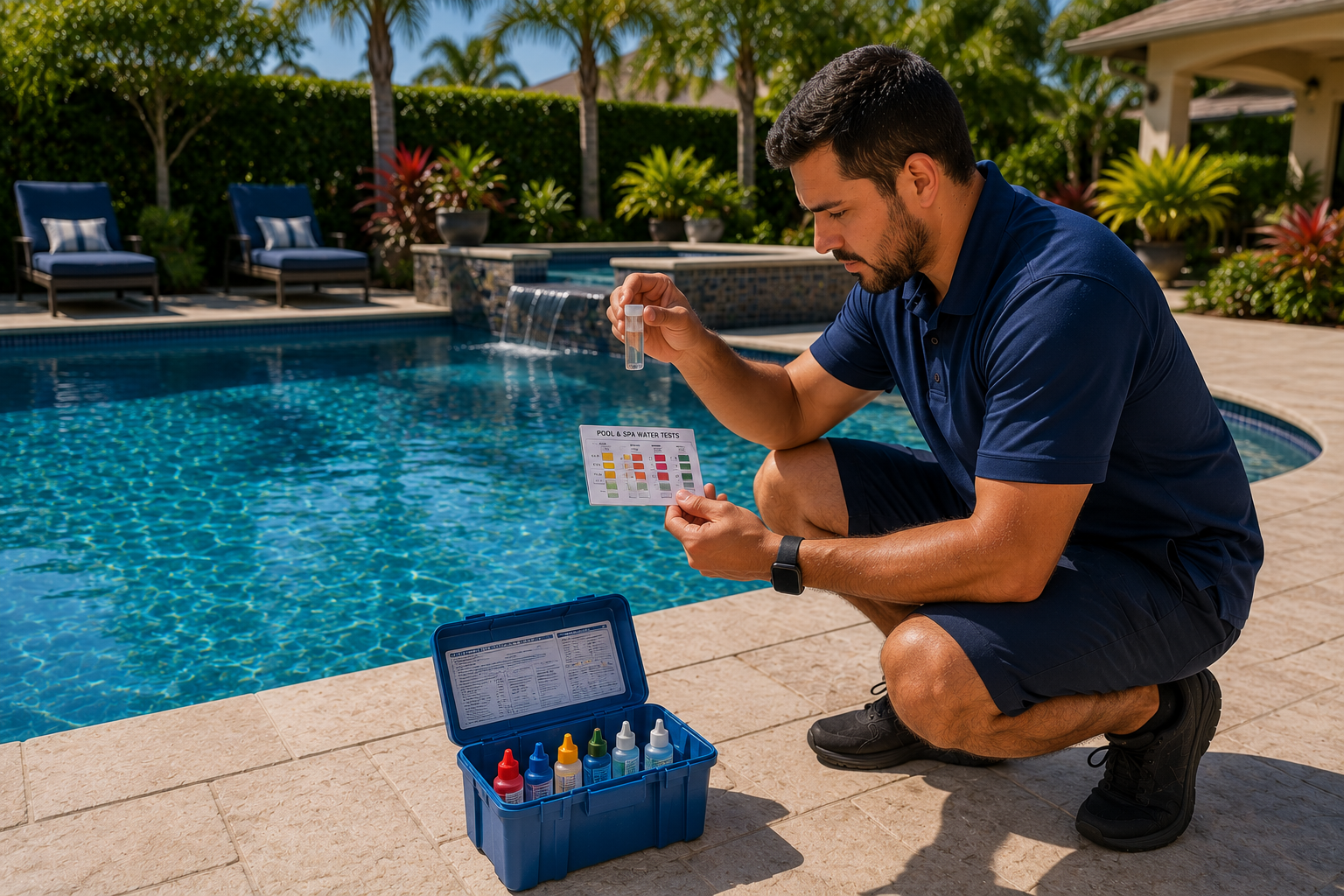
Test strips and basic kits provide snapshots—not answers.
They can tell you:
What levels are at a given moment
But they don’t tell you:

Why those levels keep shifting
How variables are interacting
What adjustments will hold long-term
This is why many pools end up in a cycle of:

Test


Adjust

Temporary Improvement

Repeat
Proper analysis breaks that cycle.
What a Full Water Analysis Evaluates
A complete assessment looks at the relationship between multiple chemical factors:
- pH – impacts comfort, chlorine effectiveness, and surface wear
- Alkalinity – stabilizes pH and prevents rapid fluctuation
- Calcium hardness – affects scaling and surface longevity
- Free vs combined chlorine – determines actual sanitation strength
- Cyanuric acid (stabilizer) – controls how quickly chlorine breaks down in sunlight
- Total dissolved solids (TDS) – reflects long-term saturation and buildup
- These values don’t operate independently—adjusting one can throw off another if not done correctly.
Why Pools Drift Out of Balance
Even if a pool is balanced once, it won’t stay that way without ongoing control.
Common causes of imbalance include:
- Rain dilution lowering chemical levels
- Heat accelerating chlorine loss
- UV exposure breaking down sanitizer
- Organic debris introducing contaminants
- Poor circulation preventing even distribution
When Water Issues Are Actually Equipment Issues
Many recurring water problems are mechanical—not chemical.
For example:
- Weak circulation creates stagnant zones
- Poor filtration allows particles to remain suspended
- Failing pumps reduce sanitizer effectiveness
Surface Damage Caused by Bad Water
Water that’s out of balance doesn’t just look off—it damages the pool.
Over time, imbalance can cause:
- Surface etching and roughness
- Staining and discoloration
- Calcium scaling at the waterline
- Reduced lifespan of finishes
Stabilizing Water Instead of Constantly Adjusting It
The goal of proper analysis isn’t just fixing current readings—it’s creating stability.
That means:
- Fewer chemical adjustments
- Longer-lasting clarity
- Reduced algae risk
- Lower overall maintenance effort
Why Curtis Pools
70+ Years of Experience
Complimentary Design & Planning
We look at the full system—not just test results.
Exclusive Free Start-Up Package
Includes one month of service and Pool Patrol safety features.
In-House Team, No Shortcuts
Water testing and correction are handled methodically, not guesswork.

Areas We Serve
Frequently Asked Questions