Smoother, Lower-Chlorine Pool Systems for Homes Around Largo and Nearby Florida Communities
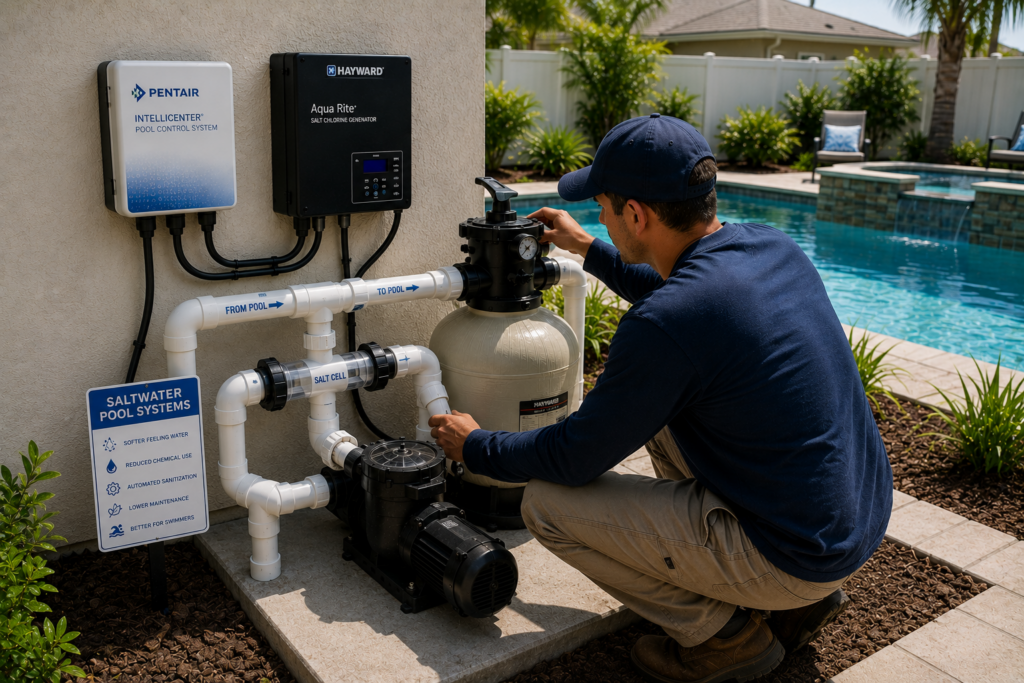
Saltwater pools aren’t chlorine-free—they’re chlorine managed differently. Instead of manually adding chlorine, a salt system generates it continuously through electrolysis. The result, when designed and installed correctly, is more stable sanitation, fewer chemical swings, and a noticeably more comfortable swimming experience.
Curtis Pools installs and converts saltwater pool systems for homeowners in Largo and nearby Florida communities, focusing on proper cell sizing, plumbing integration, and water balance. Whether you’re planning a new build or upgrading an existing pool, the goal is the same: consistent water quality without the spikes, guesswork, and harsh feel that come with manual dosing.
What Actually Changes When You Go Saltwater
The biggest shift is how chlorine gets into the water.
With traditional systems:
- Chlorine is added in batches (liquid, tablets, etc.)
- Levels rise and fall between doses
- Water balance can swing, especially in heat and rain
With saltwater:
- A salt cell converts dissolved salt into chlorine continuously
- Levels stay more consistent
- Adjustments are smaller and more predictable
For many homeowners, that translates to clearer water with less day-to-day intervention—especially during Florida’s long swim season.
New Builds vs. Conversions: Two Different Paths
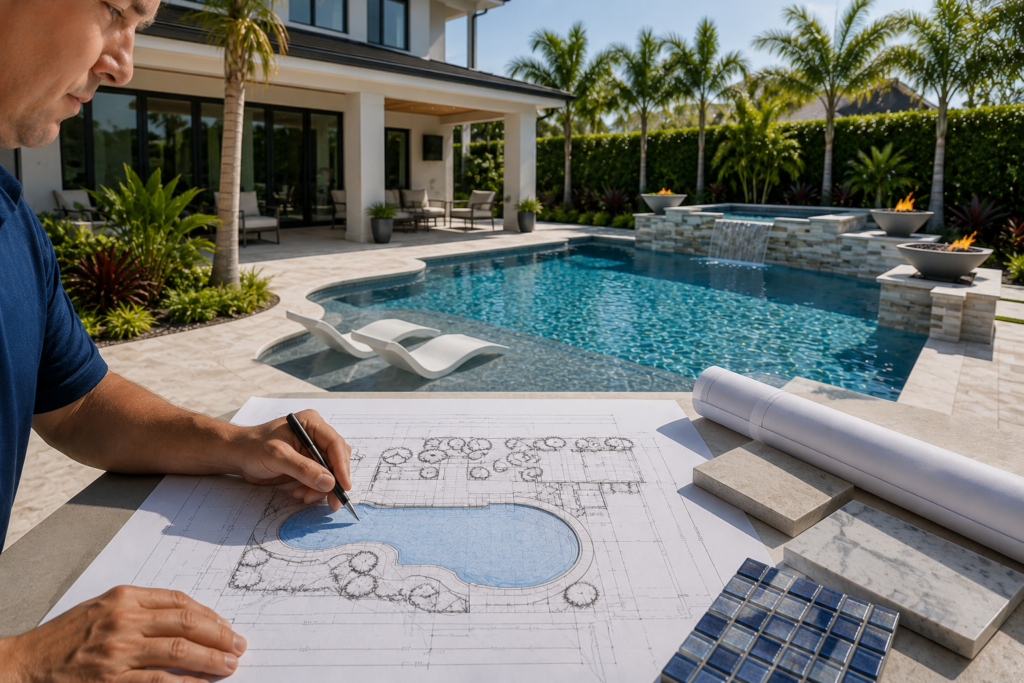
Saltwater can be integrated during construction or added to an existing pool. The approach is different for each.
- New Construction (Best Case)
- Cell is sized to the exact pool volume and usage
- Plumbing is designed for proper flow through the cell
- Automation can control output precisely
- Materials are selected with salt exposure in mind
- Converting an Existing Pool
- Existing plumbing is evaluated for compatibility
- Equipment pad is adjusted to accommodate the cell
- Water chemistry is reset and stabilized
- Metal components are checked for salt compatibility
- Conversions are common and effective—but require a careful setup to avoid scaling, corrosion, or poor chlorine production.
Sizing the Salt Cell (Where Most Systems Go Wrong)
Undersized cells are one of the most common causes of frustration.
If the cell is too small:
- It runs at or near 100% output constantly
- It wears out faster
- It struggles to keep up during peak heat or heavy use
- Produces chlorine efficiently at lower output
- Lasts longer
- Maintains stable levels with less intervention
Water Balance in Florida Conditions
Saltwater doesn’t eliminate the need for balanced water—if anything, it requires more attention to specific parameters.
In the Largo area, key factors include:
- High temperatures accelerating chlorine demand
- Frequent rain diluting chemistry
- Sun exposure increasing sanitizer consumption
- pH (tends to drift upward in salt systems)
- Total alkalinity
- Calcium hardness
- Stabilizer (CYA) for UV protection
The Comfort Difference (What You’ll Notice First)
Most homeowners notice the feel before anything else.
Compared to traditionally chlorinated pools, saltwater typically:
- Feels softer on skin and eyes
- Produces less of the strong “chlorine smell”
- Causes less irritation after long swims
Equipment Integration and Flow Requirements
Salt cells need proper flow to function correctly. Too little flow reduces chlorine production. Too much can cause wear or inefficiency.
We design systems to ensure:
- Correct placement of the salt cell in the plumbing line
- Adequate flow rate through the cell
- Compatibility with pumps and filters
- Integration with heaters and automation systems
Saltwater and Pool Surfaces
Salt itself is not inherently damaging, but improper chemistry or material selection can create issues over time.
Considerations include:
- Stone coping and decking (some materials are more salt-sensitive)
- Metal fixtures and hardware
- Tile and grout durability
- Interior surface compatibility
- With the right materials and water balance, saltwater systems perform well across most modern pool builds.
Maintenance Reality (What Changes, What Doesn’t)
Saltwater reduces some maintenance—but not all.
What gets easier:
- Less frequent manual chlorine dosing
- More stable sanitation levels
- Fewer extreme chemical swings
- Regular testing of water chemistry
- Cleaning the salt cell (periodically)
- Monitoring pH and alkalinity
- Routine filtration and debris removal
Cost Considerations: Upfront vs. Ongoing
Saltwater systems involve an upfront investment but can offset some ongoing costs.
Upfront costs include:
- Salt cell and control system
- Installation or conversion labor
- Periodic cell replacement (multi-year lifespan)
- Reduced need for some chemicals
- Potentially lower day-to-day chemical spend
Is Saltwater the Right Fit for Your Pool?
Saltwater is a strong option if you want:
- More consistent water quality
- A softer swimming experience
- Reduced hands-on chemical management
- You prefer full manual control of dosing
- Your pool materials are not compatible without upgrades
- You don’t want to monitor pH drift more closely
Why Curtis Pools
70+ Years of Experience
Experience installing and tuning pool systems for long-term performance in Florida conditions.
Complimentary Design & Planning
We evaluate whether saltwater makes sense for your pool—not just sell the upgrade.
Exclusive Free Start-Up Package
Includes one month of service and Pool Patrol safety features.
Locally Trusted Across the Region
Serving Largo and nearby Florida communities with reliable pool systems.
Residential & Commercial Specialists
We design systems that perform consistently under real-world usage.
In-House Team, No Shortcuts
Proper installation and setup matter more than the equipment itself.
Industry Innovation Leaders
We integrate automation and modern controls where they actually improve usability.

Areas We Serve
Frequently Asked Questions