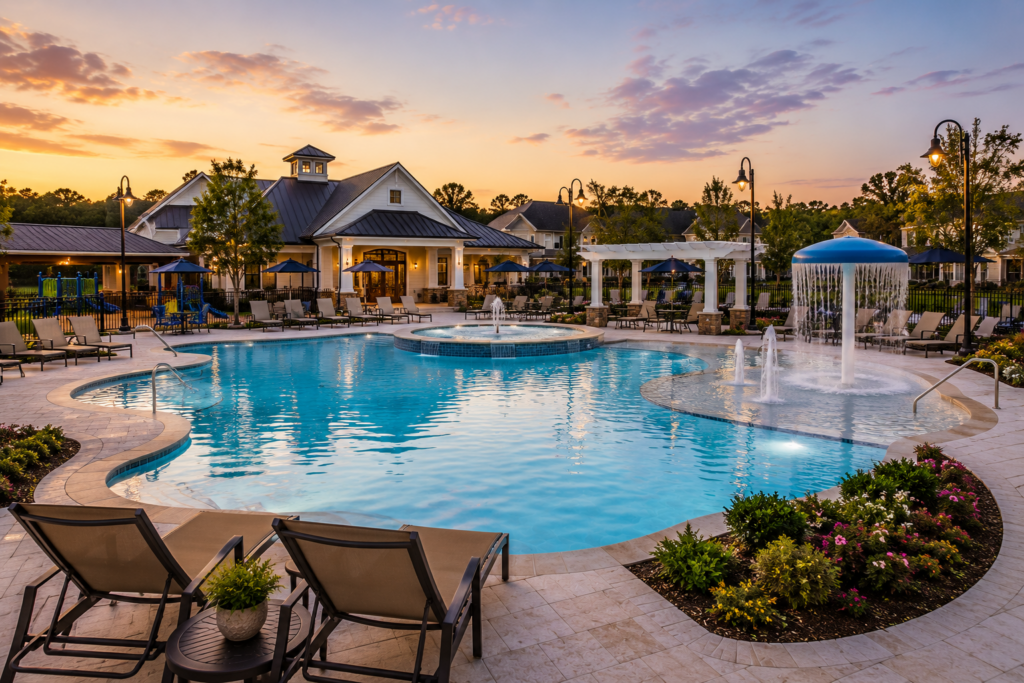
Community Pool Service for Public Facilities Throughout Largo and Surrounding Communities
Community pool service operates at the intersection of high usage, public visibility, and regulatory oversight.
Unlike HOA or apartment pools, which serve defined groups, community pools often serve broader populations—residents, guests, members, and in some cases the general public. That creates higher variability in usage, increased safety responsibility, and greater pressure to maintain consistent conditions across longer operating hours.
In these environments, the pool is not just an amenity—it is a public-facing facility that must remain safe, clean, and operational under unpredictable demand.
If your community pool is becoming difficult to manage, failing to stay consistent between service visits, or requiring frequent corrective action, you can schedule a free community pool service consultation to evaluate where performance is breaking down.
Public-Access Pools Experience Unpredictable Usage Patterns
Community pools rarely operate on a predictable schedule.
Instead, they experience:
- That means:
- Open-access or semi-public usage
- Seasonal spikes tied to weather
- Events, camps, or group activities
- Sudden surges in bather load
- Variable supervision levels
This creates a service challenge because demand is not only high—it can shift rapidly within a single day.
Water chemistry, debris accumulation, and filtration demand can all change faster than a standard service schedule can correct. Community pool service must be designed to stabilize these fluctuations rather than simply respond to them.
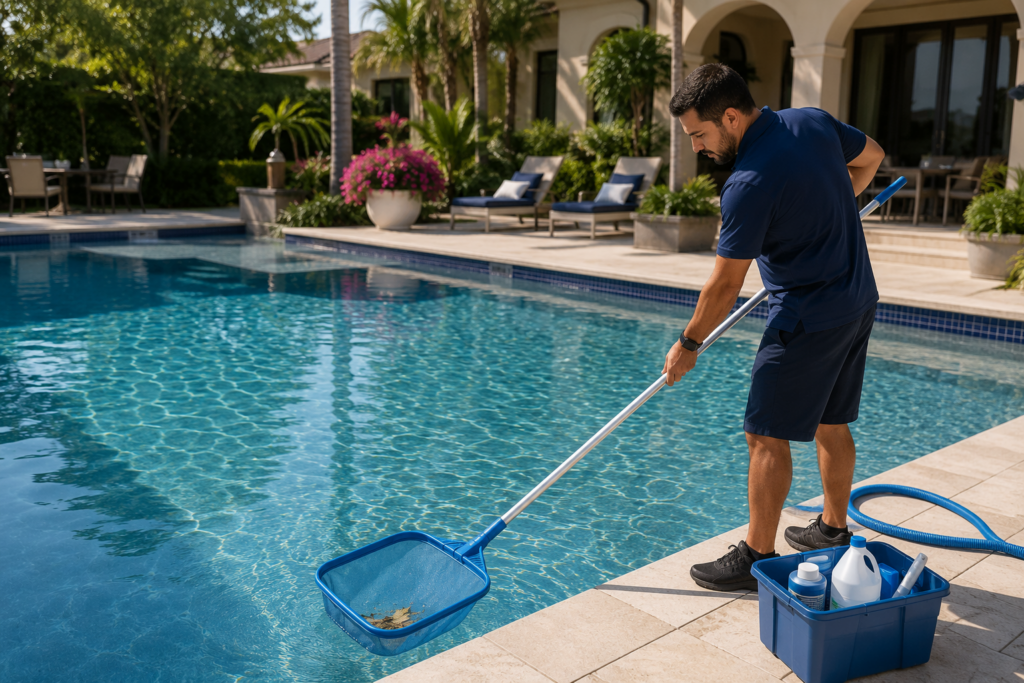
Core Components of Community Pool Service

Water Chemistry Monitoring
Community pool service requires frequent testing and adjustment because bather load is inconsistent and often high. Sanitizer levels, pH, and alkalinity must be maintained within proper ranges to ensure safe swimming conditions and prevent rapid water quality decline.

Routine Cleaning
Debris, organic material, and environmental contaminants accumulate quickly in public-use pools. Skimming, vacuuming, brushing, and tile cleaning must be performed consistently to maintain both sanitation and visual cleanliness.

Equipment Inspection
Pumps, filters, heaters, and circulation systems must be monitored regularly to ensure they are handling the load. Equipment issues in community pools tend to escalate quickly due to the volume of use.

Record Keeping
Accurate logs of chemical readings, service activity, and system performance are essential for compliance and inspection readiness. Documentation ensures accountability and helps identify recurring issues.

Safety Checks
Community pool service must include verification of safety equipment, signage, and deck conditions. Public-facing pools carry higher liability exposure, making consistent safety checks critical.

Filter Maintenance
Filtration systems must operate efficiently to manage high contaminant loads. Backwashing, basket cleaning, and pressure monitoring ensure water is being properly circulated and cleaned.
Visibility and Oversight Increase Performance Pressure
Community pools are often located in parks, recreation centers, or shared municipal spaces where they are constantly visible.
Conditions are observed by:
- Families and children
- Visitors and guests
- Staff and supervisors
- Inspectors and local authorities
Because of this visibility, even minor issues—such as debris, cloudy water, or uneven chemical levels—are more likely to be noticed and reported.
Community pool service must maintain a consistently clean and stable environment, not just meet minimum standards.
High Occupant Load Drives Rapid Water Changes
Community pools often handle larger groups than other commercial environments.
This introduces:
- Organic contaminants
- Body oils and sunscreen
- Dirt and debris
- Increased sanitizer demand
- Lose clarity
- Require more aggressive chemical adjustment
- Experience faster filter loading
- Become harder to stabilize between visits
Compliance Is a Continuous Requirement
Community pools must remain compliant at all times—not just during inspections.
Health departments typically evaluate:
- Sanitizer levels and pH balance
- Water clarity
- Safety equipment and signage
- Maintenance records
- System functionality
- Required corrective action
- Temporary closure
- Increased liability exposure
Extended Operating Hours Increase System Demand
Many community pools operate longer hours than residential or private facilities.
This leads to:
- Extended pump runtime
- Increased energy usage
- Higher filtration demand
- Greater chemical consumption
- Accelerated equipment wear
When Service Alone Cannot Maintain Stability
Some community pools continue to experience issues despite consistent service.
This typically indicates system limitations such as:
- Surface wear increasing contaminant retention → commercial pool resurfacing
- Circulation issues affecting water movement
- Filtration systems that cannot keep up with demand
- Aging infrastructure requiring commercial pool renovation
In these cases, increasing service frequency may provide temporary improvement but does not address the root cause.
Why Curtis Pools
70+ Years of Experience
Complimentary Design & Planning
We evaluate system performance and service structure to identify where instability or inefficiency is occurring.
Exclusive Free Start-Up Package
We establish a stable baseline so the pool begins from a controlled, predictable condition.
Locally Trusted Across the Region
Experience across Largo and surrounding communities provides insight into seasonal usage, debris patterns, and environmental impact.
Waterfront & Structural Specialists
We account for site-specific conditions that influence water quality and long-term system performance.
Unmatched Craftsmanship & Customization
Service plans are tailored to each facility’s usage patterns and operational requirements.
In-House Team, No Shortcuts
Cleaning, maintenance, and system oversight are coordinated to reduce recurring issues and inconsistencies.
Areas We Serve
Frequently Asked Questions