Apartment Pool Service for High-Traffic Multifamily Properties in Pinellas County
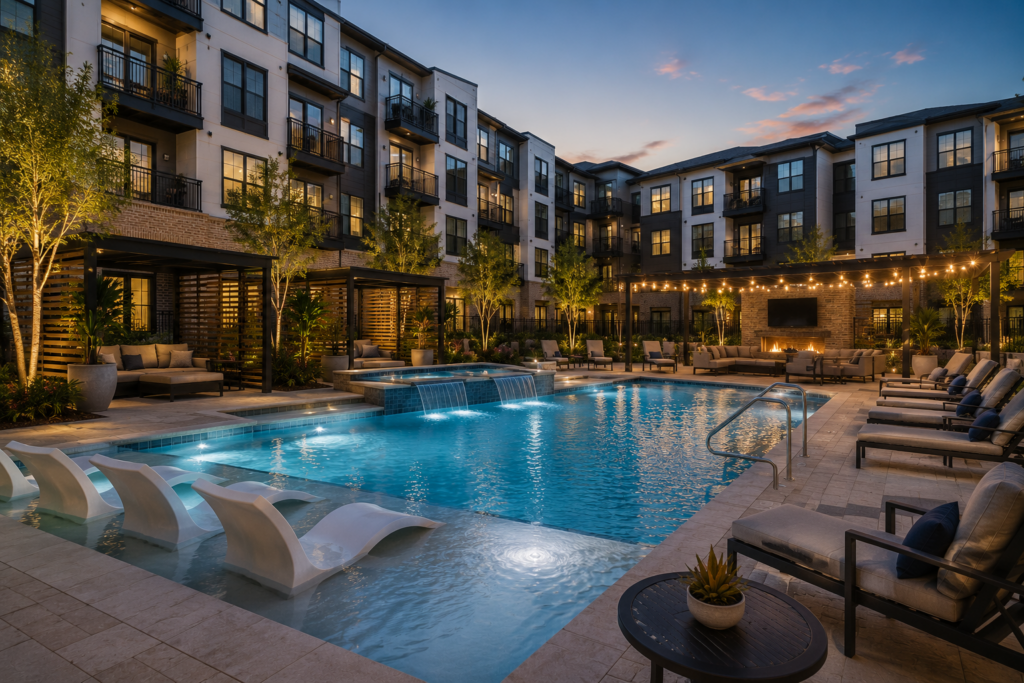
Apartment pool service has to account for one major reality: residents use the pool like part of the property’s everyday living space.
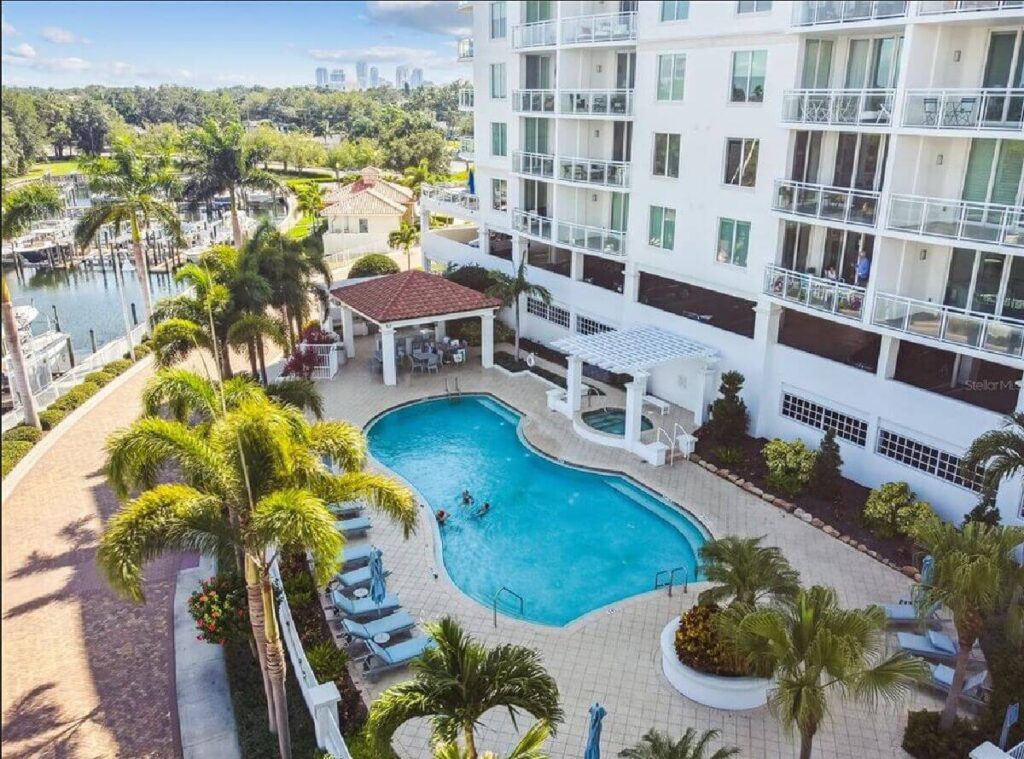
That makes apartment pools different from HOA, hotel, gym, and community pools. Usage is steady, unpredictable, and often concentrated during evenings, weekends, holidays, and leasing season. The pool is also highly visible to prospective tenants, current residents, property managers, maintenance teams, and ownership groups. When conditions slip, the issue is not just water quality—it affects resident satisfaction, property perception, lease appeal, and management workload.
Apartment pool service must keep the pool consistently clean, chemically balanced, inspection-ready, and presentable without requiring constant intervention from onsite staff.
If your apartment pool is producing recurring complaints, cloudy water, debris buildup, chemical swings, or equipment issues, you can schedule a free apartment pool service consultation to identify what needs to change.
Apartment Pools Operate Under Continuous, High-Demand Usage
Apartment pools do not usually have the controlled usage patterns of a gym or the short-term guest turnover of a hotel. They serve residents who may use the pool repeatedly throughout the week, bring guests, gather in groups, and use the space heavily during warm weather.
That creates a service challenge because the load is both consistent and uneven.
A pool may be quiet on a weekday morning, heavily used after school, crowded on Saturday, and hit with landscaping debris after storms. Each shift affects sanitizer demand, filtration load, surface cleanliness, and water clarity.
Apartment pool service has to account for that changing pattern. A fixed checklist is not enough if the plan does not reflect how the property is actually used.
Core Components of Our Apartment Pool Service

Water Chemistry Monitoring
Apartment pools require frequent testing and adjustment because demand can shift quickly based on occupancy, resident use, weather, and peak amenity hours. Sanitizer, pH, and alkalinity must be kept within proper ranges to prevent cloudy water, irritation complaints, algae growth, and inspection issues. In multifamily settings, chemical stability is not just a technical requirement—it is part of keeping the amenity usable and dependable.

Routine Cleaning
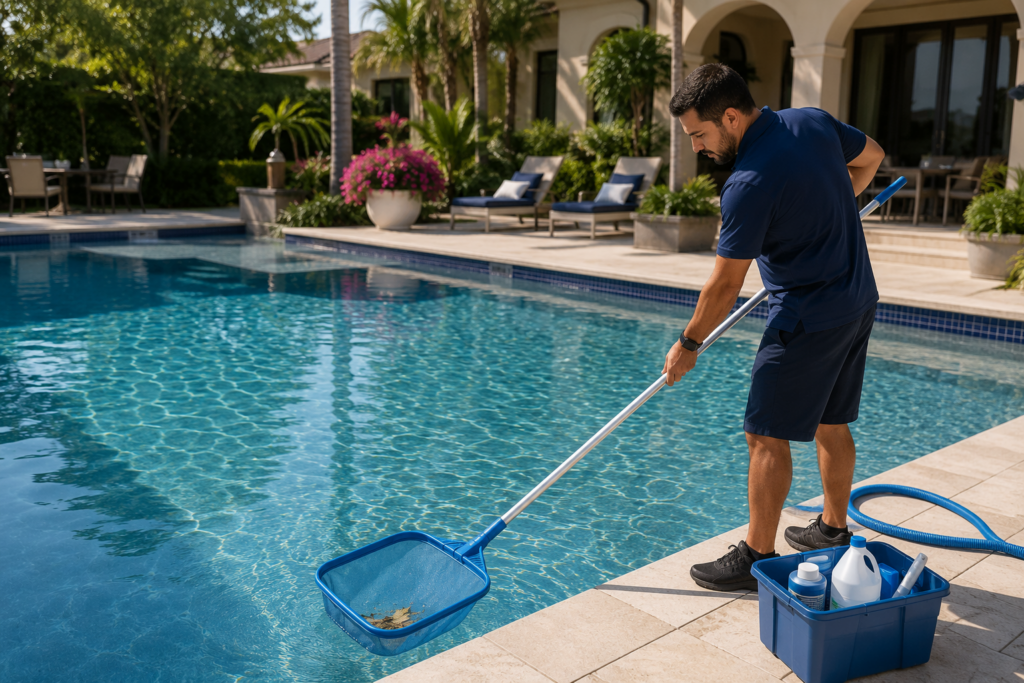
Routine cleaning must address both visible debris and the contaminants residents bring into the water. Skimming, vacuuming, brushing, tile line cleaning, and basket emptying help remove leaves, oils, sunscreen, dirt, and organic material before they affect water quality. Apartment pool cleaning also has to protect appearance because the pool is often part of leasing tours and resident retention.

Equipment Inspection
Pumps, motors, filters, heaters, valves, lighting, and automation controls should be checked regularly because apartment pool equipment often runs under long operating hours. Early signs of reduced flow, noisy operation, filter pressure changes, or inconsistent heating should be caught before they become resident-facing problems or emergency repairs.

Record Keeping
Detailed service records help property managers document water chemistry, service visits, chemical adjustments, cleaning activity, and equipment concerns. For apartment communities, record keeping supports compliance, protects management, and creates a clear history when ownership, maintenance staff, or inspectors need to understand what has been happening at the pool.

Safety Checks
Apartment pools require ongoing safety attention because residents and guests use the area throughout the day. Safety checks should include required equipment, signage, gates, lighting, and visible deck conditions. Pool deck cleaning matters as well, especially in areas where wet surfaces, tracked-in debris, or algae buildup can increase slip risk.

Filter Maintenance
Apartment pools place heavy demand on filtration systems. Backwashing, basket cleaning, pressure checks, and filter performance monitoring help ensure water is actually being circulated and cleaned properly. When filter maintenance falls behind, chemical adjustment alone cannot keep the pool clear.
Why Apartment Pool Service Has to Support Property Management
For apartment communities, pool problems quickly become management problems.
Residents do not always distinguish between a water chemistry issue, a filtration issue, or a cleaning issue. They simply see cloudy water, debris, algae, odor, closed gates, or warning signs. Those issues turn into work orders, complaints, negative impressions, and unnecessary pressure on onsite staff.
A strong apartment pool service plan reduces that burden by creating predictable conditions.
- That means:
- Fewer resident complaints
- Fewer emergency service requests
- Better communication with property management
- More reliable amenity availability
- Cleaner presentation during tours and resident events
- The goal is not just to maintain the pool. The goal is to make the pool easier for the property to manage.
High Occupancy Changes Water Chemistry Fast
Apartment pools often experience sudden bather load changes. A pool that is stable before peak use can shift quickly after a busy afternoon.
Heavy use introduces:
- Sweat and body oils
- Sunscreen and lotions
- Hair products
- Dirt and organic material
- Higher sanitizer demand
Cleaning Standards Affect Resident Perception
In multifamily communities, appearance matters.
A technically safe pool can still create problems if it looks neglected. Residents and prospects notice:
- Floating debris
- Dirty tile lines
- Stained steps
- Cloudy water
- Full baskets
- Slippery or dirty deck areas
Equipment Problems Create Fast Resident-Facing Issues
Apartment pool equipment has to support constant demand. If a pump loses efficiency, a filter gets overloaded, or a heater becomes unreliable, the effect can show up quickly.
Common equipment-related issues include:
- Reduced circulation
- Poor filtration turnover
- Inconsistent water temperature
- Longer recovery after heavy use
- Recurring cloudy water
- Higher chemical usage
Apartment Pool Service Has to Account for Peak Season
Peak season changes everything for multifamily pools.
During warmer months, resident demand increases, guest traffic rises, and pools are often used for longer periods throughout the day. Landscaping debris, storms, heat, and UV exposure can also increase chemical demand and cleaning needs.
A service plan that works in slower months may not be strong enough during peak season.
Apartment pool service may need to adjust around:
- Increased testing frequency
- More intensive cleaning
- Higher chemical demand
- Faster filter loading
- Greater deck and amenity area use
When Apartment Pool Service Needs System-Level Support
Not every recurring problem can be solved by increasing service frequency.
If an apartment pool continues to struggle despite consistent service, the issue may be tied to the pool system itself.
Common examples include:
- Aging surfaces that hold algae and staining
- Poor circulation that leaves dead zones
- Filters that cannot keep up with demand
- Pumps that no longer move enough water
- Outdated layouts that make cleaning harder
Documentation Matters for Multifamily Operations
Apartment communities often involve multiple decision-makers: onsite managers, regional managers, maintenance supervisors, ownership groups, and sometimes third-party management companies.
That makes documentation important.
Good apartment pool service should provide a clear record of:
- Chemical readings
- Service dates
- Cleaning performed
- Equipment concerns
- Corrective actions
- Recurring issues
Why Curtis Pools
70+ Years of Experience
Complimentary Design & Planning
We evaluate the service plan, pool condition, equipment performance, and management needs together so apartment pool service is built around the property’s actual operation.
Exclusive Free Start-Up Package
We help establish a stable baseline for chemistry, cleaning, and equipment performance so the pool starts from a more predictable condition.
Locally Trusted Across the Region
Experience serving Largo and nearby multifamily communities gives us practical insight into local weather, debris patterns, seasonal use, and resident expectations.
Waterfront & Structural Specialists
We account for site conditions that affect apartment pools, including runoff, drainage, exposure, surface wear, and environmental contamination.
Unmatched Craftsmanship & Customization
Service plans are tailored to the property’s occupancy, pool layout, equipment condition, and amenity expectations rather than copied from a generic schedule.
In-House Team, No Shortcuts
Cleaning, maintenance, equipment awareness, and communication are coordinated so property managers are not left managing disconnected vendors or recurring problems.
Areas We Serve
Frequently Asked Questions